Best Home Improvements That Actually Increase Your House Value
Best Home Improvements That Actually Increase Your House Value in 2026
Reading time: 9 minutes
You’ve seen the home improvement shows. Sledgehammers through walls, marble waterfalls on kitchen islands, and a reveal that supposedly adds six figures to a home’s value. Reality is messier—and far more interesting. Some upgrades quietly pay for themselves within a year of resale; others barely move the needle no matter how much charm they add to your daily life.
This guide cuts through the noise using 2026 remodeling data, appraiser insights, and real-world case studies so you can spend your renovation budget where it actually counts.
Table of Contents
- Why Return on Investment Matters More Than Ever in 2026
- The Highest-ROI Projects This Year
- Kitchen and Bathroom Renovations Worth Doing
- Curb Appeal: The Underrated Value Driver
- Energy Efficiency Upgrades Buyers Are Demanding
- Comparing ROI: A Visual Breakdown
- Common Renovation Mistakes That Kill Value
- Frequently Asked Questions
- Your Renovation Roadmap Forward
Why Return on Investment Matters More Than Ever in 2026
Mortgage rates have hovered between 6.1% and 6.8% through early 2026, which means buyers are pickier and sellers can’t just throw money at a house and expect it back. According to the latest Remodeling Impact Report, homeowners recouped an average of just 62% of renovation costs at resale last year—down from pre-pandemic averages. That’s the blunt truth: most projects don’t pay for themselves dollar-for-dollar. The ones that come close share a common thread—they fix a problem buyers actively worry about, rather than adding a luxury they might enjoy.
Well, here’s the straight talk: chasing “value” isn’t about picking the trendiest finish—it’s about matching the improvement to what your specific market rewards.
The Highest-ROI Projects This Year
Real estate appraisers and remodeling economists consistently point to a handful of projects that outperform the rest. These aren’t flashy, but they’re the ones buyers notice immediately during a walkthrough.
Garage Door Replacement
It sounds almost too simple, yet garage door replacement has topped national ROI rankings for three years running. A steel, insulated door with a mid-range price tag (roughly $4,600 installed in 2026) recoups close to 194% of its cost at resale in many markets, according to cost-vs-value analyses. Why? It’s the largest visual element on most home facades, and an outdated door screams “deferred maintenance.”
Manufactured Stone Veneer
Adding stone veneer accents to a home’s entry or lower facade continues to be one of the few exterior projects that returns more than 100% of its cost. It signals quality and durability without requiring a full siding overhaul.
Minor Kitchen Remodel
Notice the word “minor.” Full gut renovations with $75,000+ budgets rarely return more than 45-55% of cost. But a minor refresh—new cabinet fronts, updated hardware, a modern backsplash, energy-efficient appliances—typically costs $28,000-$32,000 and recovers 85-96% depending on region.
Kitchen and Bathroom Renovations Worth Doing
Quick Scenario: Imagine you’re selling a 1990s colonial with the original oak cabinets and almond-colored appliances. Should you spend $90,000 gutting the kitchen, or $25,000 refreshing it? Almost every appraiser will tell you the same thing—buyers respond to updated, not necessarily new.
A case in point: a Denver-area seller in late 2025 spent $27,500 repainting cabinets, swapping laminate for quartz countertops, and replacing appliances with stainless-steel models. The home sold 11 days after listing for $14,000 over asking. Compare that to a neighbor who spent $110,000 on a full custom kitchen and sold for roughly the same price per square foot—the extra investment simply didn’t translate into a proportional price bump.
Bathroom Strategy
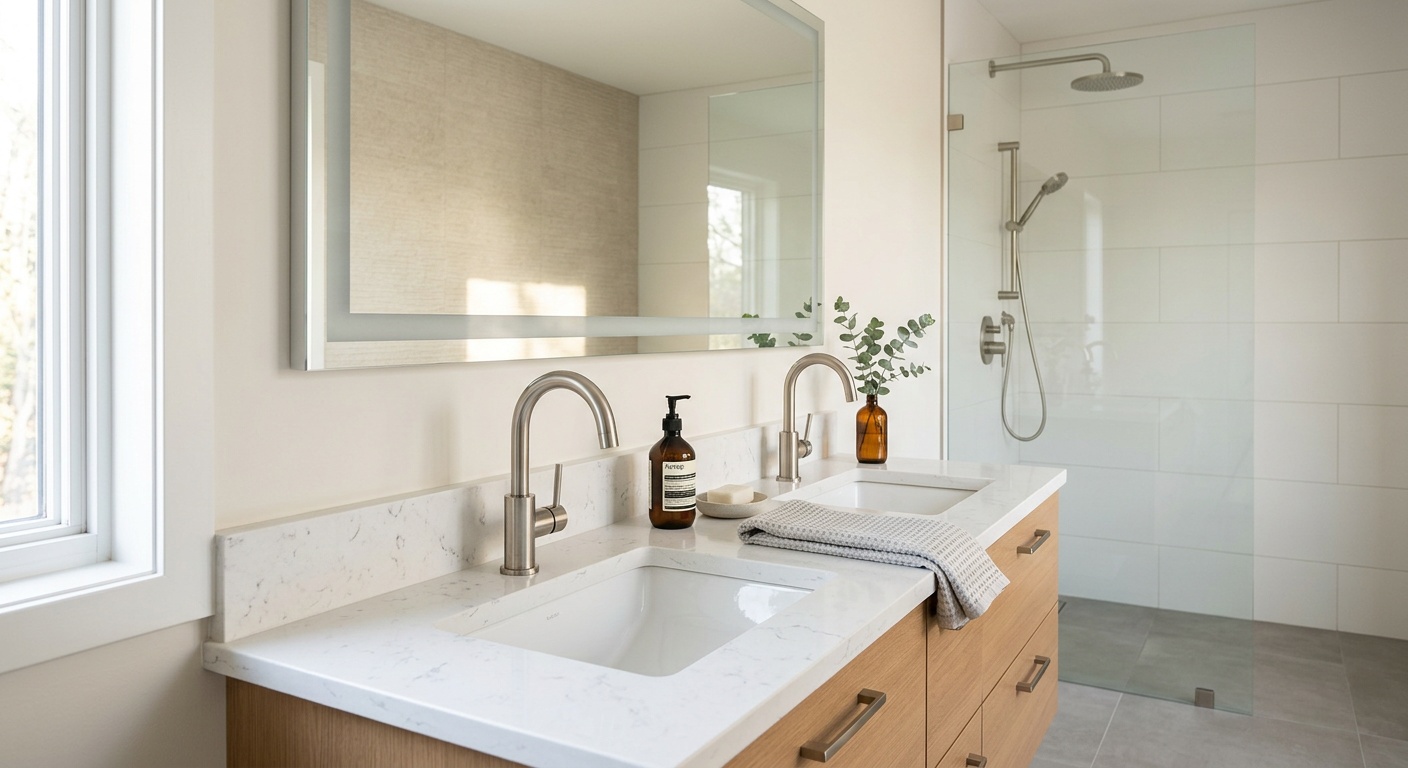
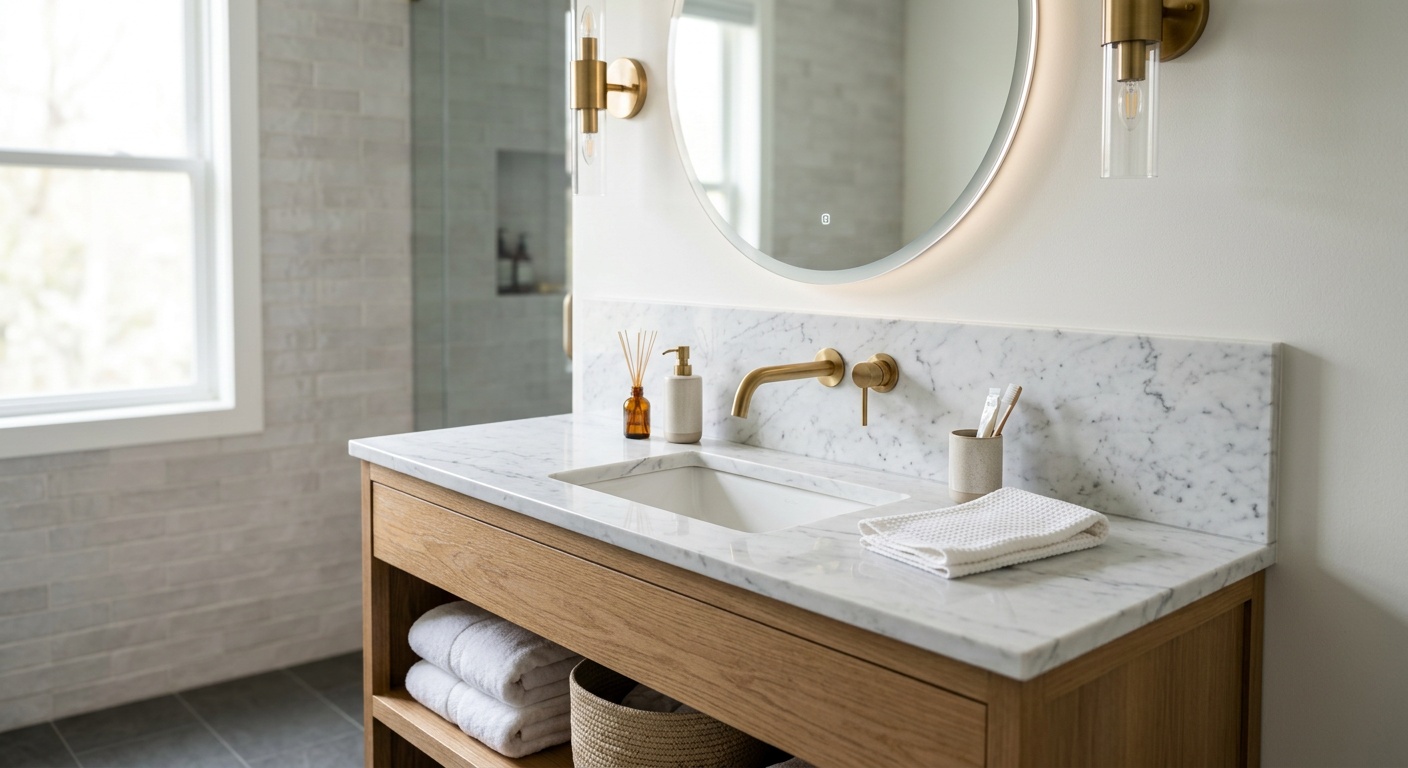
Minor bathroom remodels—new vanity, updated tile, modern fixtures, better lighting—cost around $19,000-$24,000 in 2026 and return approximately 74-80%. Adding a second bathroom to a one-bath home remains one of the few “big swing” projects that can still justify itself, especially in markets where three-bedroom, one-bath homes are penalized heavily by appraisers.
Curb Appeal: The Underrated Value Driver
Here’s something most homeowners underestimate: landscaping and exterior refreshes influence a buyer’s emotional response before they even step inside. A National Association of Realtors survey found that 92% of real estate agents recommend improving curb appeal before listing, and well-executed landscaping can add 15-20% to perceived home value.
Practical Roadmap for curb appeal on a budget:
- Repaint or stain the front door in a bold, on-trend color
- Replace outdated house numbers and light fixtures
- Mulch beds and add drought-tolerant native plantings
- Power-wash siding, walkways, and the driveway
- Replace a worn mailbox and add symmetrical potted plants
Energy Efficiency Upgrades Buyers Are Demanding
Energy costs are no longer a background concern—they’re a top-three buyer priority in 2026, according to multiple regional MLS surveys. Utility volatility over the past two years has made efficiency upgrades a genuine selling point rather than a “nice to have.”
Heat Pumps and Insulation
Replacing an aging furnace or AC unit with a heat pump system typically costs $9,000-$16,000 after available rebates, and buyers increasingly ask directly about HVAC age during showings. Combined with attic insulation upgrades (often under $2,500), sellers report faster closings and fewer inspection-related price negotiations.
Solar Panels: Proceed With Nuance
Solar remains a mixed bag. Owned systems in sunny, high-electricity-cost states like California and Arizona can boost home value by 3-4%. Leased systems, however, can actually complicate a sale and occasionally scare off buyers due to transfer agreements. If you’re installing solar purely for resale value, buy outright or through a loan that transfers cleanly with the deed.
Comparing ROI: A Visual Breakdown
Renovation ROI Comparison Table
| Project | Avg. Cost (2026) | Value Added | ROI | Time to Complete |
|---|---|---|---|---|
| Garage Door Replacement | $4,600 | $8,900 | 194% | 1 day |
| Stone Veneer Accent | $11,200 | $17,100 | 153% | 3-5 days |
| Minor Kitchen Remodel | $29,800 | $27,100 | 91% | 2-3 weeks |
| Minor Bathroom Remodel | $21,500 | $16,600 | 77% | 1-2 weeks |
| Full Kitchen Overhaul | $92,000 | $47,000 | 51% | 6-10 weeks |
Common Renovation Mistakes That Kill Value
Mistake 1: Over-personalizing finishes. That bold purple accent wall or heated indoor dog-washing station might feel perfect for you, but appraisers value neutral, broadly appealing choices. Stick to finishes a wide range of buyers can picture living with.
Mistake 2: Ignoring the neighborhood ceiling. Every neighborhood has a price ceiling. Adding a $150,000 primary suite to a home in a $350,000 area rarely returns proportional value—buyers in that price bracket simply aren’t shopping for that level of luxury.
Mistake 3: Skipping permits. Unpermitted work is a growing red flag in 2026 as more buyers order detailed inspection and permit-history reports before closing. An unpermitted addition can delay a sale or force a price reduction to cover retroactive permitting costs.
Pro Tip: Before starting any project over $10,000, ask a local real estate agent what buyers in your specific price bracket are actually asking for. National averages are useful benchmarks, but hyper-local demand drives your actual resale outcome.
Frequently Asked Questions
Is it better to renovate or just price the home lower to reflect its condition?
It depends on your timeline and local inventory. In competitive markets with low inventory, buyers are often willing to overlook cosmetic issues, so pricing accordingly can work. In slower markets with more competition, targeted updates—especially kitchens, bathrooms, and curb appeal—tend to shorten time on market and reduce negotiation leverage for buyers.
Do smart home features add real resale value in 2026?
Smart thermostats, video doorbells, and smart locks are now expected amenities rather than premium upsells—they rarely add direct dollar value but can make a listing feel more competitive. Avoid over-investing in elaborate whole-home automation systems, as buyers rarely pay a premium for complexity they may not want to maintain.
How much should I budget for renovations before selling?
A common rule of thumb is 1-3% of your home’s current market value for pre-sale touch-ups (paint, landscaping, minor repairs), and up to 5-10% for a strategic minor kitchen or bathroom refresh if your home is notably dated compared to comparable listings.
Your Renovation Roadmap Forward
Ready to turn your renovation budget into genuine equity instead of just a personal indulgence? Here’s your action plan:
- Start with the exterior. Garage doors, stone veneer, and landscaping deliver the fastest, most reliable ROI in 2026.
- Refresh, don’t gut. Minor kitchen and bathroom updates consistently outperform full overhauls in cost-recovery terms.
- Invest in efficiency. Heat pumps, insulation, and owned solar systems align with what today’s buyers explicitly ask about.
- Know your ceiling. Match your renovation scale to your neighborhood’s price range, not your personal wish list.
- Document everything. Permits and receipts protect your investment and reassure buyers during inspections.
As mortgage rates and buyer expectations continue to shift through 2026 and beyond, the smartest homeowners will be the ones who treat renovations as strategic investments, not just aesthetic upgrades. So, before you pick up that sledgehammer, ask yourself: is this improvement solving a problem your future buyer actually cares about?