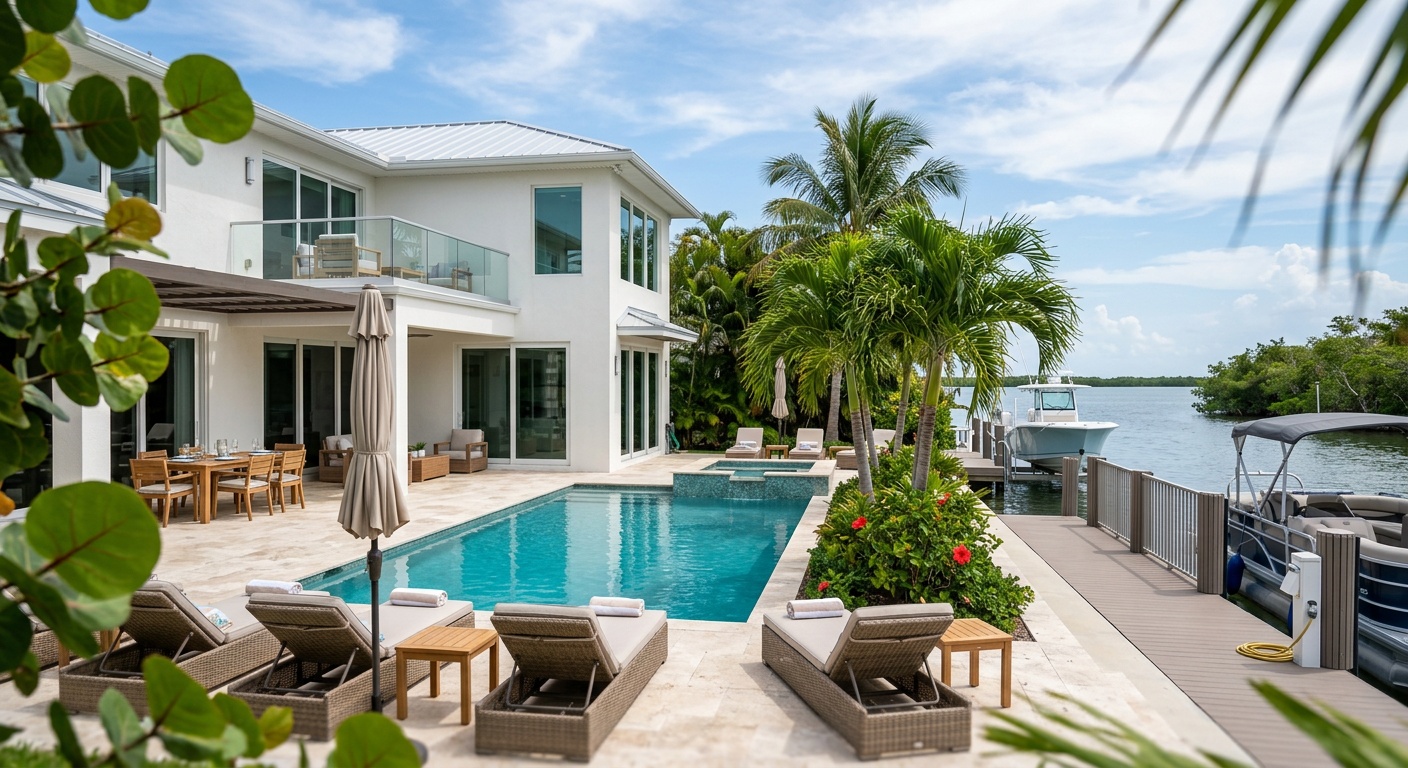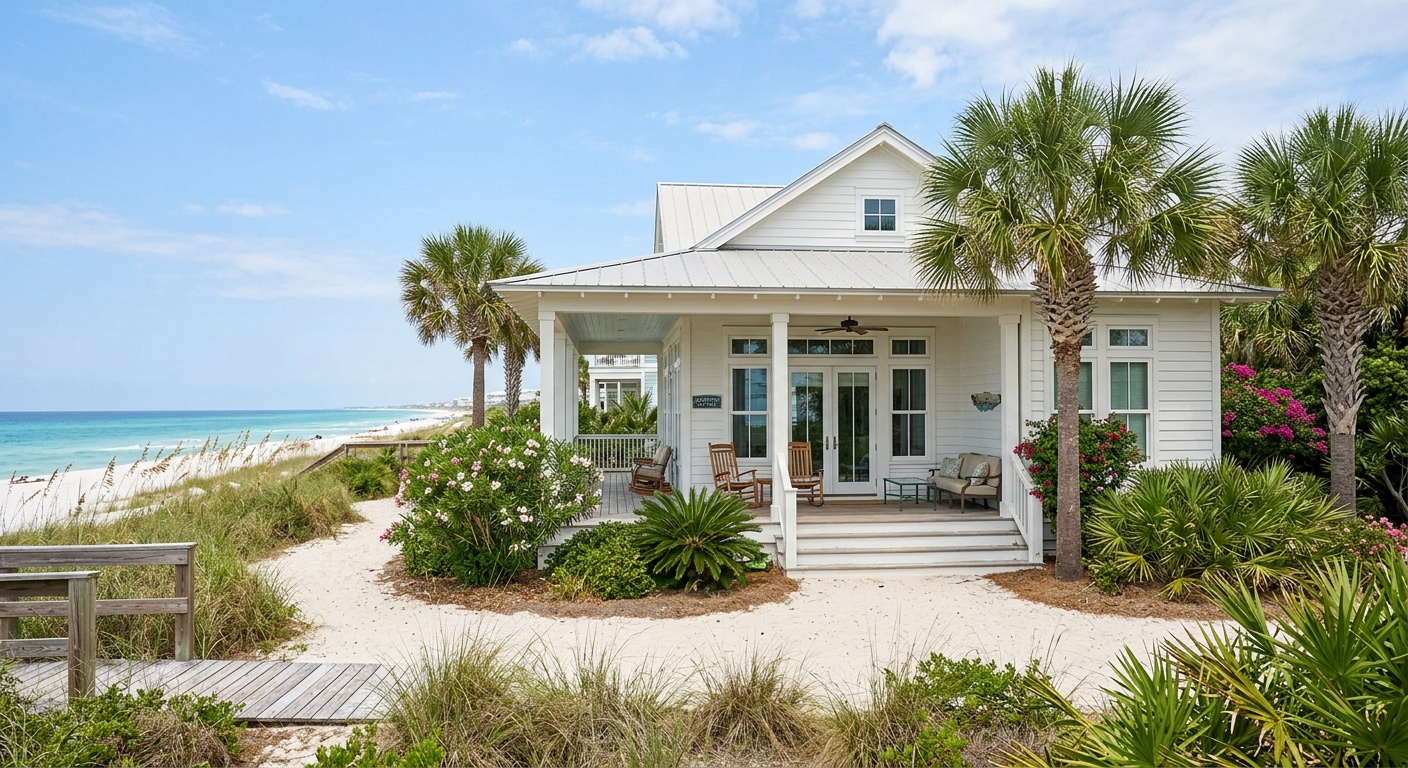
Top Davenport Florida Vacation Rental Homes Worth Buying Now
Top Davenport Florida Vacation Rental Homes Worth Buying Now
Reading time: 9 minutes
Table of Contents
- Why Davenport Is Still a Smart Bet in 2026
- Market Snapshot: Numbers That Matter
- Top Neighborhoods Worth Your Attention
- Real Buyer Case Studies
- Common Challenges and How to Solve Them
- ROI Comparison by Community
- Frequently Asked Questions
- Your Roadmap Forward
Why Davenport Is Still a Smart Bet in 2026
Ever tried explaining to a friend why a small Central Florida town outsells entire coastal markets in short-term rental income? Davenport doesn’t have a beach. It doesn’t have a skyline. What it has is proximity—about 15 minutes from Walt Disney World and a steady stream of families who want a private pool instead of a hotel room.
Here’s the straight talk: Davenport isn’t a hidden gem anymore. It’s a mature, well-understood vacation rental market, and that maturity is exactly why it’s worth buying into now rather than waiting. Interest rates have stabilized in the low-to-mid 6% range through early 2026, inventory has loosened slightly compared to the frantic 2023–2024 cycle, and gated resort communities continue to see occupancy rates that outperform national short-term rental averages.
Quick Scenario: Imagine you’re a first-time investor with $450,000 to deploy. Do you chase a trendy Airbnb arbitrage market with unpredictable regulations, or do you buy into a town that’s built its entire local economy around short-term guest hospitality? Davenport’s zoning, HOA structures, and property management infrastructure are specifically designed for this use case—that’s a structural advantage you can’t manufacture overnight.
Market Snapshot: Numbers That Matter
According to regional MLS data compiled through Q1 2026, Davenport’s median vacation home price sits around $415,000, up modestly from 2025 but still well below Kissimmee’s comparable resort-zone pricing. Average gross annual rental revenue for a 6-bedroom pool home in a top-tier resort community ranges between $68,000 and $92,000, depending on management quality and amenity access.
Local property manager Denise Ferro, who oversees a portfolio of 40+ homes in the ChampionsGate corridor, put it this way: “Owners who treat this like a hospitality business—updating furniture every three to four years, responding fast to guest messages—consistently outperform the market average by 15 to 20 percent. It’s not passive income. It’s active income that behaves passively once the systems are in place.”
That distinction matters. Buying the right home is only half the equation; running it like a small business is the other half.
What Makes a Davenport Home “Investment Grade”
Not every house with a pool qualifies as a strong rental. The homes generating top-tier returns in 2026 share a few traits:
- Resort community amenities — water parks, clubhouses, mini-golf, and fitness centers that justify premium nightly rates
- Bedroom count of 6+ — larger groups pay disproportionately more per bedroom than smaller units
- Themed or upgraded interiors — Disney-adjacent theming (game rooms, character suites) consistently boosts booking conversion
- Short-term rental-friendly HOA — some communities restrict rentals under 30 days, so this is non-negotiable diligence
The Regulatory Landscape You Can’t Ignore
Polk County, where Davenport sits, has maintained a relatively permissive stance on short-term rentals compared to Orange County’s stricter Orlando-area ordinances. That said, 2026 has brought renewed conversation at the county level about licensing fees and noise ordinances following complaints in a handful of communities. Buyers should confirm current STR licensing requirements and HOA rental minimums before closing—this is the single most overlooked step in the entire purchase process.
Top Neighborhoods Worth Your Attention
Three communities consistently rise to the top of investor conversations this year:
- ChampionsGate — Golf-course adjacent, resort-style amenities, strong appeal to golf and family travelers alike. Premium pricing but premium occupancy.
- Solterra Resort — Newer construction, tropical-themed clubhouse, and a strong reputation among European tour operators who book blocks of homes seasonally.
- Storey Lake — Slightly more affordable entry point, water park amenity, and growing popularity with Brazilian and Latin American travel agencies.
Real Buyer Case Studies
Case Study 1: The Remote Investor. Mark and Priya, a couple based in Toronto, purchased a 7-bedroom themed home in ChampionsGate in late 2025 for $612,000. With professional management and a Star Wars-themed bunk room, they hit 78% annual occupancy by mid-2026, generating gross revenue near $101,000. Their net cash flow after mortgage, management fees (typically 18-22% of revenue), and maintenance landed around $22,000—modest but growing as they build repeat-guest loyalty.
Case Study 2: The Cash Buyer Downsizing Risk. Retired teacher Sandra Ellis paid cash for a 5-bedroom Solterra Resort home at $389,000, avoiding financing costs entirely. With no mortgage burden, even a conservative 55% occupancy rate produced comfortable annual cash flow near $38,000, illustrating how debt-free purchases change the entire risk calculus.
Case Study 3: The Value-Add Renovator. A local investment group bought a dated Storey Lake property for $340,000 in 2025, invested $45,000 in a game room conversion and pool resurfacing, and increased average nightly rate from $210 to $295 within eight months—proof that strategic upgrades can outperform buying a turnkey property at a premium.
Common Challenges and How to Overcome Them
Challenge 1: Overestimating Occupancy. New buyers often model spreadsheets around 80%+ occupancy, which only top-performing homes achieve. Solution: model conservatively at 55-65% for year one, then adjust upward once you have real booking data.
Challenge 2: Underestimating Turnover Costs. Cleaning, linen replacement, and pool maintenance add up fast with frequent guest turnover. Solution: build a maintenance reserve of at least 10% of gross revenue annually.
Challenge 3: Choosing the Wrong Management Company. A mediocre manager can tank your reviews and occupancy simultaneously. Solution: interview at least three companies, ask for references from current owners, and review their actual guest ratings on Airbnb and Vrbo before signing.
ROI Comparison by Community
Community Comparison Table
| Community | Median Price | Avg Occupancy | Gross Annual Revenue | HOA STR-Friendly |
|---|---|---|---|---|
| ChampionsGate | $540,000 | 72% | $95,000 | Yes |
| Solterra Resort | $395,000 | 65% | $78,000 | Yes |
| Storey Lake | $355,000 | 70% | $82,000 | Yes |
| Providence | $410,000 | 54% | $61,000 | Limited |
| Windsor Island | $470,000 | 68% | $88,000 | Yes |
Frequently Asked Questions
Is Davenport still profitable for short-term rentals in 2026, or is the market saturated?
It’s competitive, not saturated. Homes with strong amenities, quality photography, and responsive management still consistently book 60-75% occupancy. The homes struggling are typically outdated, poorly managed, or mispriced—not victims of an oversaturated market.
How much cash reserve should I keep after buying a Davenport rental home?
Most experienced owners recommend six months of mortgage and HOA payments plus a separate maintenance fund equal to 10% of projected annual revenue. This buffer covers slow seasons (typically September and early December) and unexpected repairs like AC or pool equipment failures.
Do I need to live in Florida to manage a Davenport vacation rental?
No. The overwhelming majority of Davenport investors are out-of-state or international owners who rely entirely on local property management companies. The key is vetting that company thoroughly rather than assuming proximity is required for success.
Your Roadmap Forward
Davenport’s vacation rental market in 2026 rewards buyers who treat this as a hospitality investment, not a passive real estate play. Here’s how to move forward with confidence:
- Step 1: Shortlist two or three resort communities based on your budget and confirm current STR licensing rules with Polk County directly.
- Step 2: Interview local property managers before you even make an offer—their fee structure and marketing quality will shape your returns more than the house itself.
- Step 3: Model conservative occupancy (55-65%) for year one and build in a 10% maintenance reserve.
- Step 4: Prioritize homes with 6+ bedrooms and upgraded or themed interiors—they consistently outperform generic listings.
- Step 5: Revisit your pricing and furnishings every 24-36 months to stay competitive against newer inventory entering the market.
The broader trend here reflects something bigger than Davenport itself: travelers increasingly prefer home-like, amenity-rich stays over traditional hotels, and markets built specifically around that preference will keep outperforming generic tourist towns. If you’re weighing whether now is the right time to buy, ask yourself this—are you ready to run a small hospitality business, or are you still hoping real estate can be entirely passive? Your answer will tell you more about your readiness than any spreadsheet ever could.